Organize a storage room with easy tips for sorting, labeling, shelving and creating zones so everything is simple to find.
A storage room should make your life easier, not add frustration to your day. Yet many gradually become catch-all areas when holiday decorations, household supplies, old paperwork and random boxes end up mixed together. Good storage room organization creates a system that allows you to find what you need quickly, maximize available space and avoid wasting time searching through clutter.

Home Organization
How to Organize a Storage Room So You Can Easily Find What You Need

Start by Taking Everything Out
It may seem counterintuitive, but the best way to organize a storage room is to begin with a blank slate. Remove everything from the room so you can see exactly what you have. This allows you to clean the space while also taking inventory of your belongings.
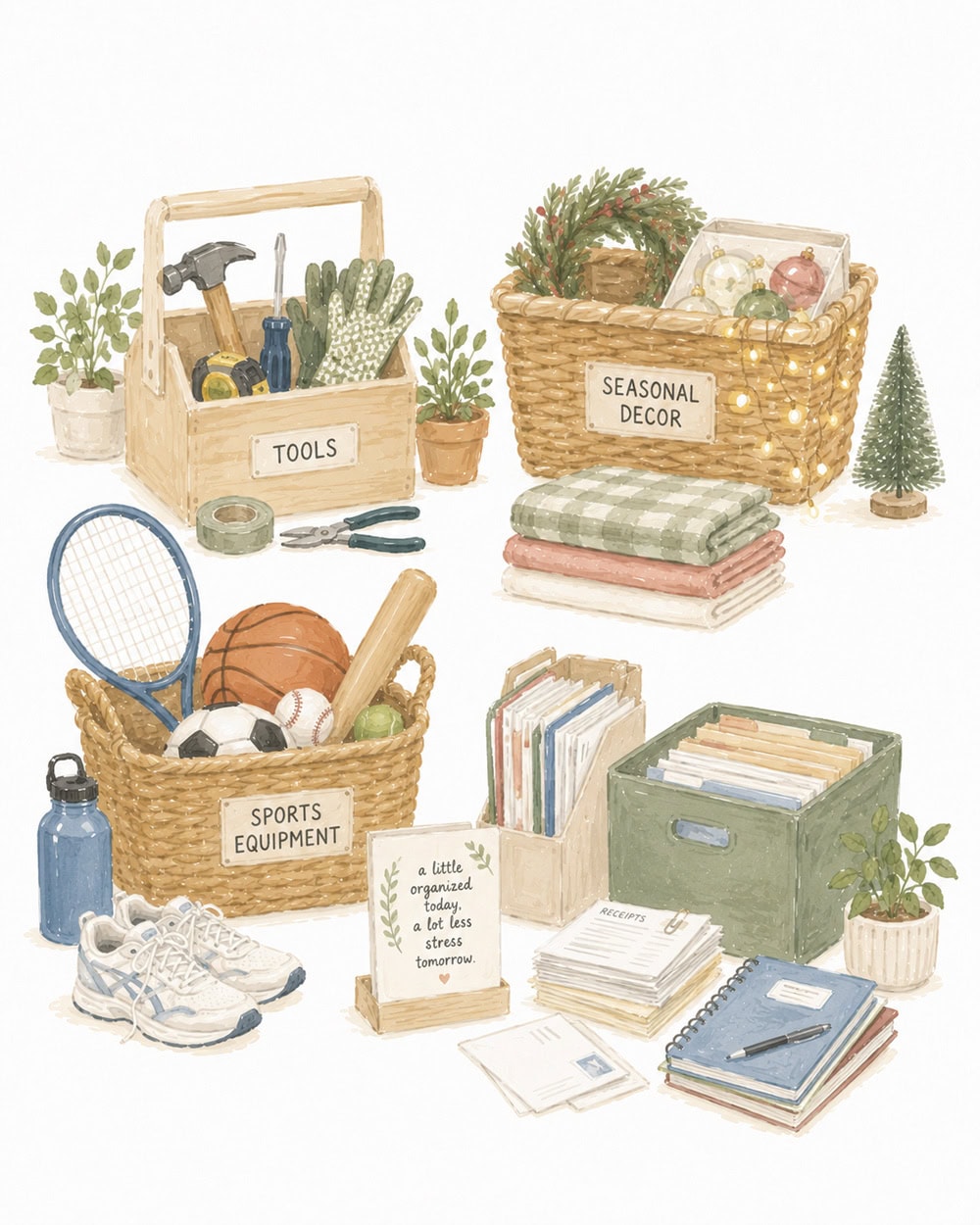
As you remove items, sort them into categories. Keep similar items together, such as tools, cleaning supplies, seasonal decorations, sports equipment, important documents and household essentials. Creating categories early in the process will make it much easier to decide where everything belongs when you put it back.
This is also the time to get rid of items you no longer need. Broken equipment, expired products and things you haven’t used in years only take up valuable space.
Create Zones for Different Categories
Once you’ve sorted your belongings, think of your storage room as a collection of zones. Each category should have a designated area that remains consistent over time.
For example, you might reserve one section for seasonal decorations, another for household maintenance supplies and another for sporting goods. Important paperwork and family keepsakes should have their own dedicated space away from areas that may be exposed to moisture or heavy traffic. When every category has a home, it becomes easier to return items to the correct place after using them.

Use Storage Bins Strategically
Storage baskets and bins are a great way to keep items together and minimize clutter. They’re especially useful for small items that might otherwise become scattered throughout the room.
Try to keep each bin dedicated to a single category. For example, one might contain extension cords and electrical supplies, while another holds camping gear. Avoid mixing unrelated items simply because there’s extra room in the container.

Prioritize Accessibility
One of the biggest mistakes people make is storing items without considering how often they use them. Frequently used items should be the easiest to access.
Keep things like batteries, light bulbs, cleaning products and basic tools within easy reach. Items you only use once or twice a year can be stored higher up or farther back in the room. This simple adjustment can dramatically improve storage room organization by reducing the amount of moving and searching required each time you need something.
Install Shelving Whenever Possible
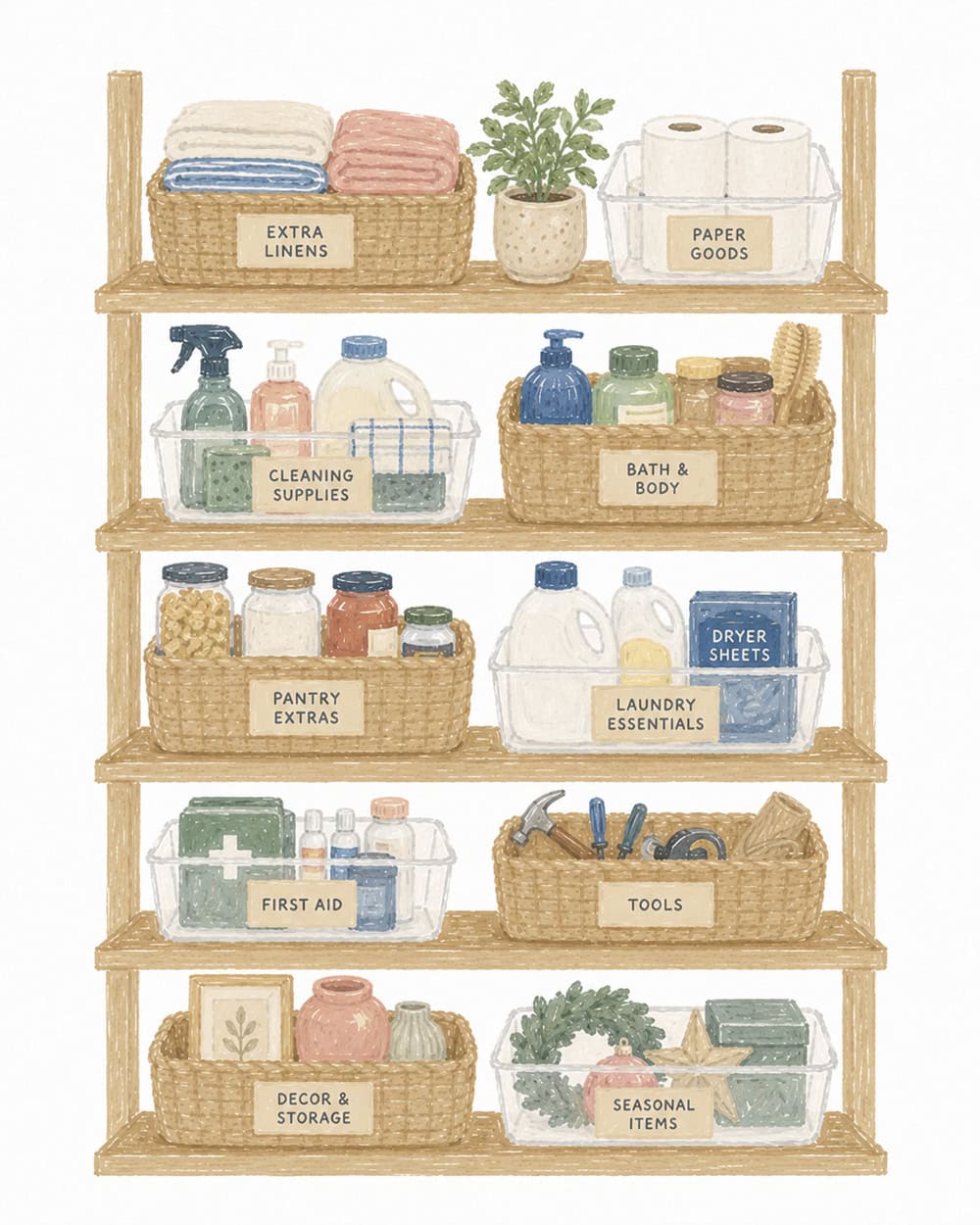
Shelving is one of the most effective ways to maximize storage space. Instead of piling boxes on the floor, shelves allow you to use vertical space while keeping items visible and accessible. Storing items vertically rather than spreading them across the floor allows you to make the most of the room’s height, freeing up valuable space and making it easier to move around the storage area.
Strong shelving units can hold heavy bins, tools and bulk household supplies while keeping the floor clear. Leave enough space between shelves and walkways so you can easily reach stored items without moving multiple containers.

Label Everything Clearly
Even if you think you’ll remember where everything is, labels are incredibly valuable. Over time, memories fade, and storage rooms tend to accumulate additional items.
Use specific labels that describe what’s inside each container. Clarity eliminates guesswork and reduces the need to open multiple containers when searching for something. A strong labeling system is one of the foundations of successful storage room organization because it allows anyone in the household to locate items quickly.
Keep the Floor as Clear as Possible
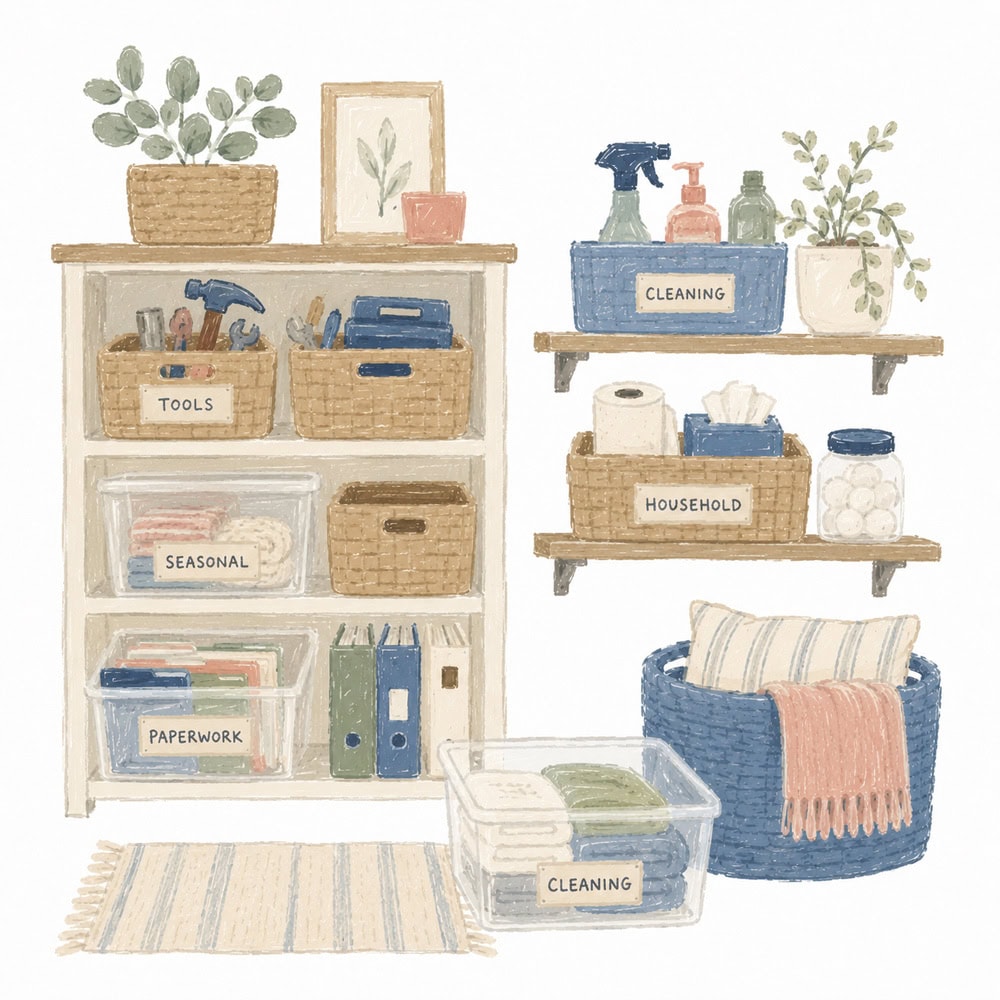
A cluttered floor can make even a large storage room feel cramped and disorganized. Whenever possible, store items on shelves, racks or wall-mounted systems rather than directly on the ground.
Keeping the floor clear improves visibility and accessibility. It also makes cleaning easier and can help protect stored belongings from potential water damage or pests.

Avoid Creating a Miscellaneous Section
Many storage rooms become disorganized because of the dreaded “miscellaneous” pile or box. Once this category exists, it tends to grow rapidly and become a dumping ground for items without an assigned home.
Instead, challenge yourself to place every item into a specific category. If enough similar items accumulate, create a new category rather than relying on a catch-all solution.

Maintain the System Regularly
A cluttered space can negatively impact your well-being, causing stress. Even the best-organized storage room will become messy if it’s not maintained. Fortunately, maintenance doesn’t require much time.
Each time you remove something from storage, make an effort to return it to its designated location when you’re finished. Spend a few minutes every month tidying shelves, updating labels if necessary and removing items that no longer belong. Regular maintenance prevents clutter from building up and helps preserve the benefits of your storage room organization system for years to come.

Focus on Function
A perfectly styled storage room may look great in photos, but functionality should always come first. The goal is to create a space where you can quickly locate what you need and confidently put it away afterward.
Cora’s passion is inspiring others to live a happy, healthful and mindful life through her words on Revivalist. She believes everyday moments are worth celebrating and brings that heart into all she shares. With more than 5 years of experience writing for lifestyle sites, Cora has a sincere love for life, beauty and style in all things. You can keep up with Cora on Twitter, Pinterest and Facebook.


Leave a Reply