Why Mom wrapped celery in foil, whether it really works and how this old fashioned kitchen trick helps celery last longer.
Welcome to What Mom Knew Wednesday…a little place where we revisit those old fashioned kitchen and household tips that were passed from one generation to the next.
Some of these tips are brilliant. Some are a little questionable. Some worked for reasons our mothers and grandmothers may not have completely understood at the time.
Today we are starting with a very simple one…
Why did Mom wrap celery in aluminum foil?
Was she truly helping it stay fresh longer…or was this simply another one of those things everyone did because their mother did it too?
Let’s find out!
JOIN THE COTTAGE MARKET FAMILY
A Little Cottage Inspiration in Your Inbox
Join us for free printables, cozy decorating ideas, easy DIY projects, delicious recipes and plenty of happy inspiration!
Start Here
The Quick Answer
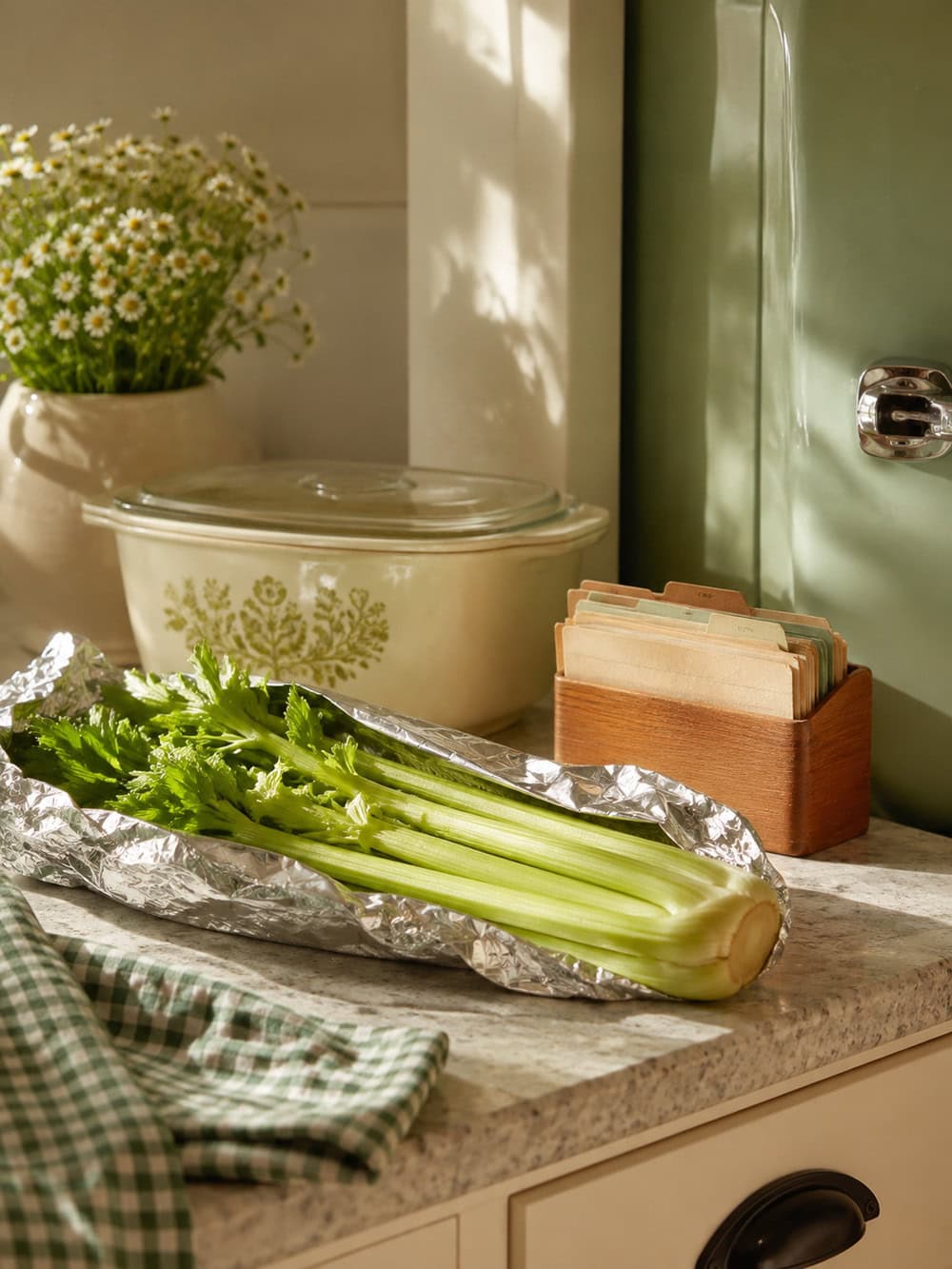
Yes…wrapping celery in foil can help it remain crisp longer.
However, the foil itself is not magic.
The biggest things celery needs are:
- A cold refrigerator
- Enough humidity to prevent it from drying out
- Protection from fruits that produce ethylene gas
- Protection from excess moisture that can collect around the stalks
Official food storage guidance generally recommends keeping celery in the refrigerator’s vegetable crisper, often inside a plastic or produce bag, and away from fruit. Properly refrigerated celery generally keeps for about one to two weeks, although every refrigerator and bunch of celery will be a little different.
Wrapping celery in foil is another practical household method that may help control moisture and protect the stalks from drying out too quickly.
Kitchen Wisdom
Why Does Celery Become Limp So Quickly?
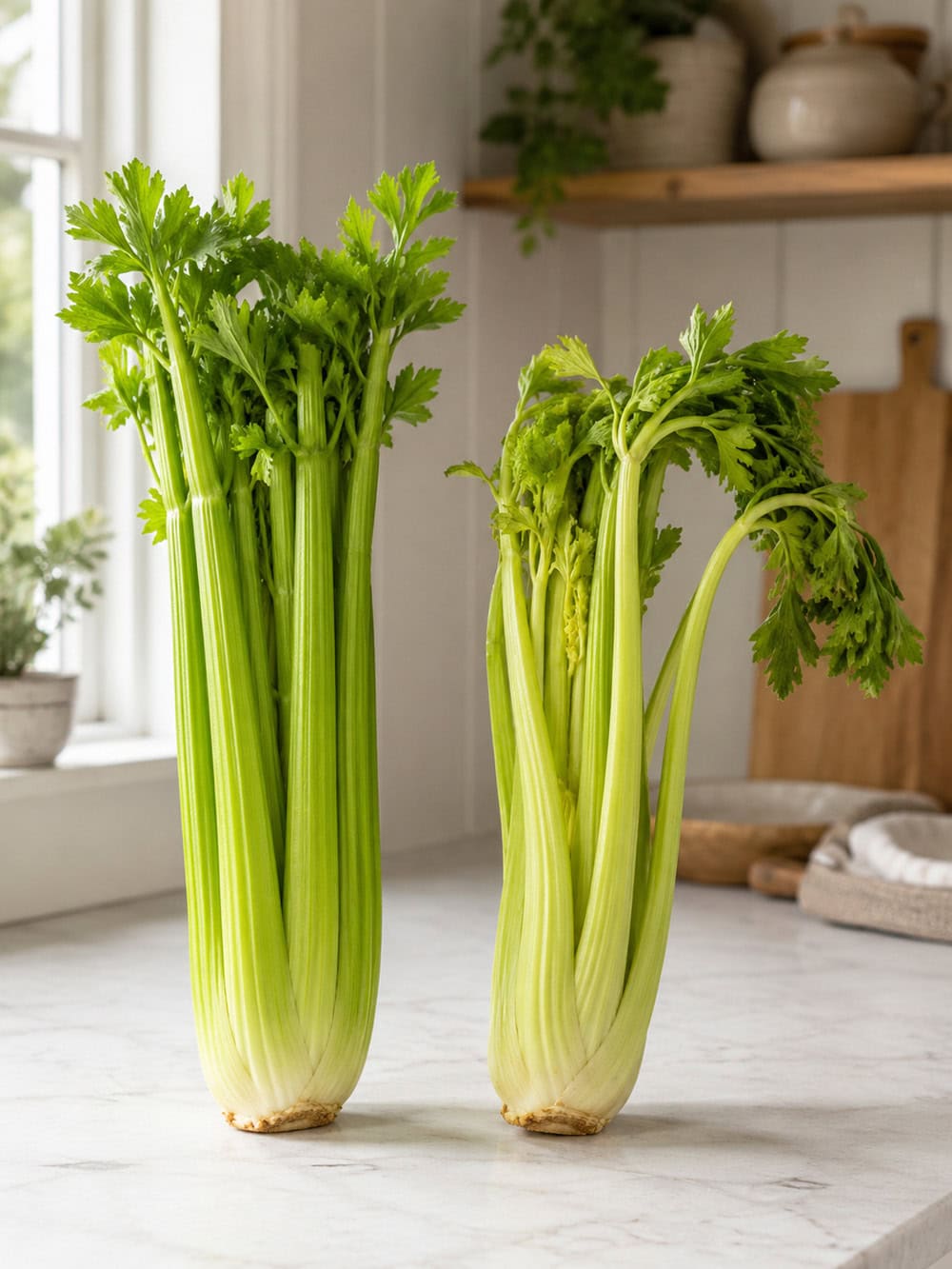
Have you ever brought home a beautiful bunch of crisp celery…only to discover a bendable, rubbery bundle hiding in the vegetable drawer a few days later?
Celery contains a great deal of water. As it slowly loses that moisture, the stalks lose their firmness and begin to bend.
It can also be affected by ethylene gas produced by certain fruits. Apples, pears, peaches and other fruits release ethylene as they ripen. Keeping fruits and vegetables separated can help protect vegetables that are sensitive to that gas.
That means your celery may not be very happy when it is tucked into the same drawer as a bowlful of apples.
Who knew vegetables could be so particular about their neighbors!
The Old Fashioned Trick
Why Use Aluminum Foil?
The traditional idea is that foil helps hold in enough moisture to keep celery from drying out without leaving the stalks sitting inside a tightly sealed and possibly damp plastic package.
The celery remains covered and protected, but the foil can still be wrapped loosely enough to prevent moisture from becoming trapped around the stalks.
This may help the celery remain firmer and fresher for a longer period.
I do want to be completely honest with you…
University food storage guides more commonly recommend a plastic or produce bag in the vegetable crisper. They do not all specifically recommend aluminum foil.
So, the foil method is best thought of as a well known household storage trick rather than an official requirement.
It often works very well…but it is not the only correct way to store celery.
Simple Method
How to Wrap Celery in Foil
Here is the simple method.
1. Remove the Store Packaging
Take the celery out of the plastic sleeve or bag it came in.
Check the stalks and remove any leaves or pieces that are already yellowing, damaged or becoming soft.
2. Keep the Bunch Whole
There is no need to chop the celery until you are ready to use it.
If the bunch is damp, gently pat it dry before wrapping. Too much moisture trapped around fresh produce can encourage it to deteriorate more quickly.
3. Wrap It in Foil
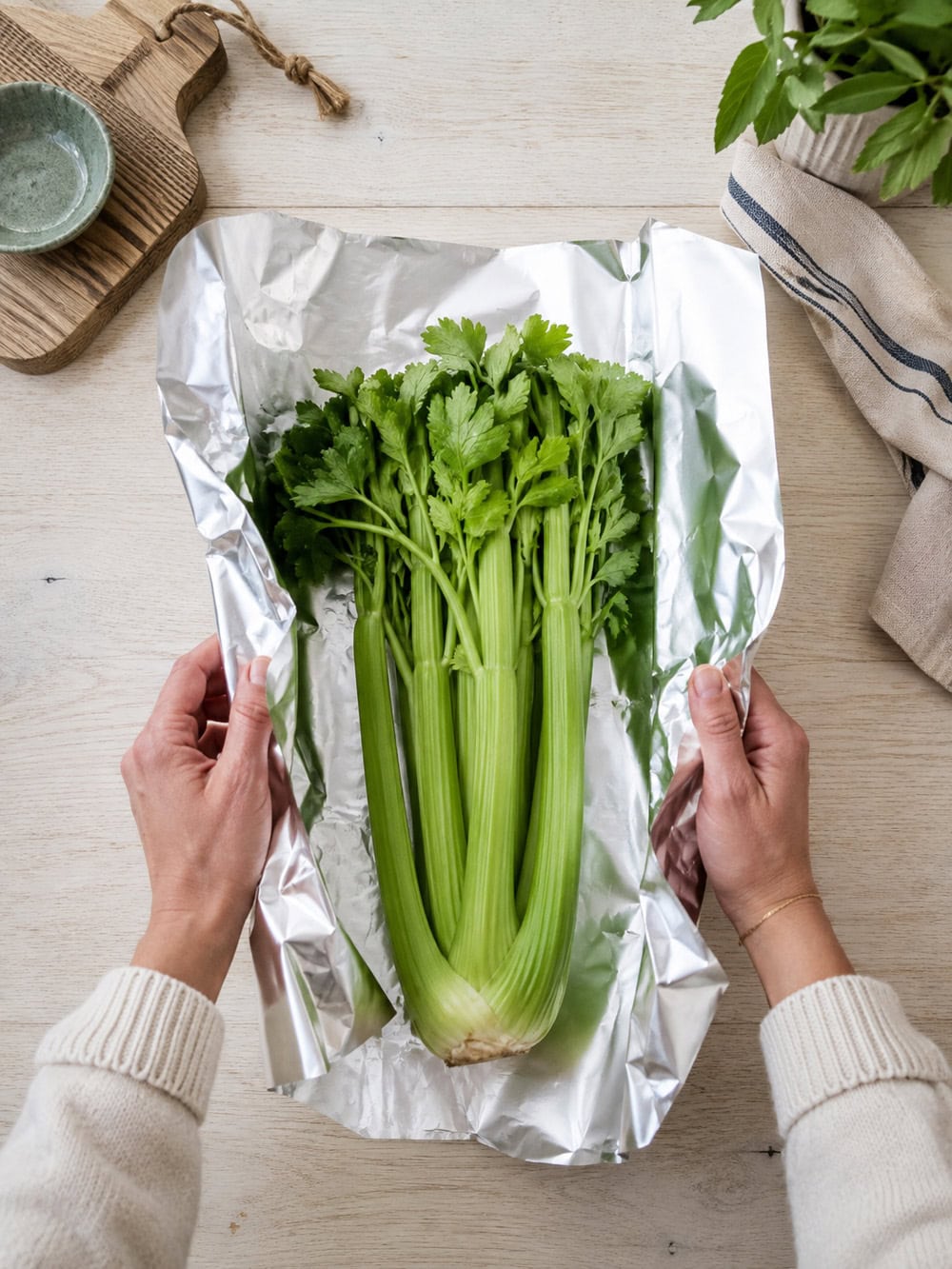
Place the whole bunch of celery on a large sheet of aluminum foil.
Wrap the foil around the celery so that it is covered, but do not squeeze or crush the stalks.
Fold the ends loosely closed.
4. Place It in the Vegetable Crisper
Keep the wrapped celery in the refrigerator’s crisper drawer.
Your refrigerator should remain at 40°F or below for safe food storage.
5. Check It Occasionally
Each time you use the celery, check for excess moisture, dark spots, sliminess or an unpleasant smell.
Rewrap the remaining stalks and return them to the refrigerator.
Little Mistakes to Avoid
What Should You Not Do?
There are a few little mistakes that can work against us.
Do Not Leave It on the Counter
Celery belongs in the refrigerator. Leaving it at room temperature encourages faster moisture loss and deterioration.
Do Not Store It Beside Ripening Fruit
Try to keep celery away from apples, pears, peaches and other ripening fruits.
Separating fruits from vegetables is one of the simplest ways to help refrigerated produce stay fresh.
Do Not Put It Away Soaking Wet
You can wait to wash the celery until you are ready to use it.
If you prefer to wash it before storing it, make sure it is thoroughly dried before wrapping it.
Before preparing or eating fresh celery, wash it well under running tap water. Soap and detergent are not needed.
Do Not Ignore Soft or Slimy Spots
Slightly bendable celery may still be perfectly usable.
Celery that is slimy, moldy, badly discolored or unpleasant smelling should be discarded.
No grocery saving trick is worth eating food that has truly spoiled.
Kitchen Wisdom
Can You Save Celery That Is Already Limp?
Sometimes!
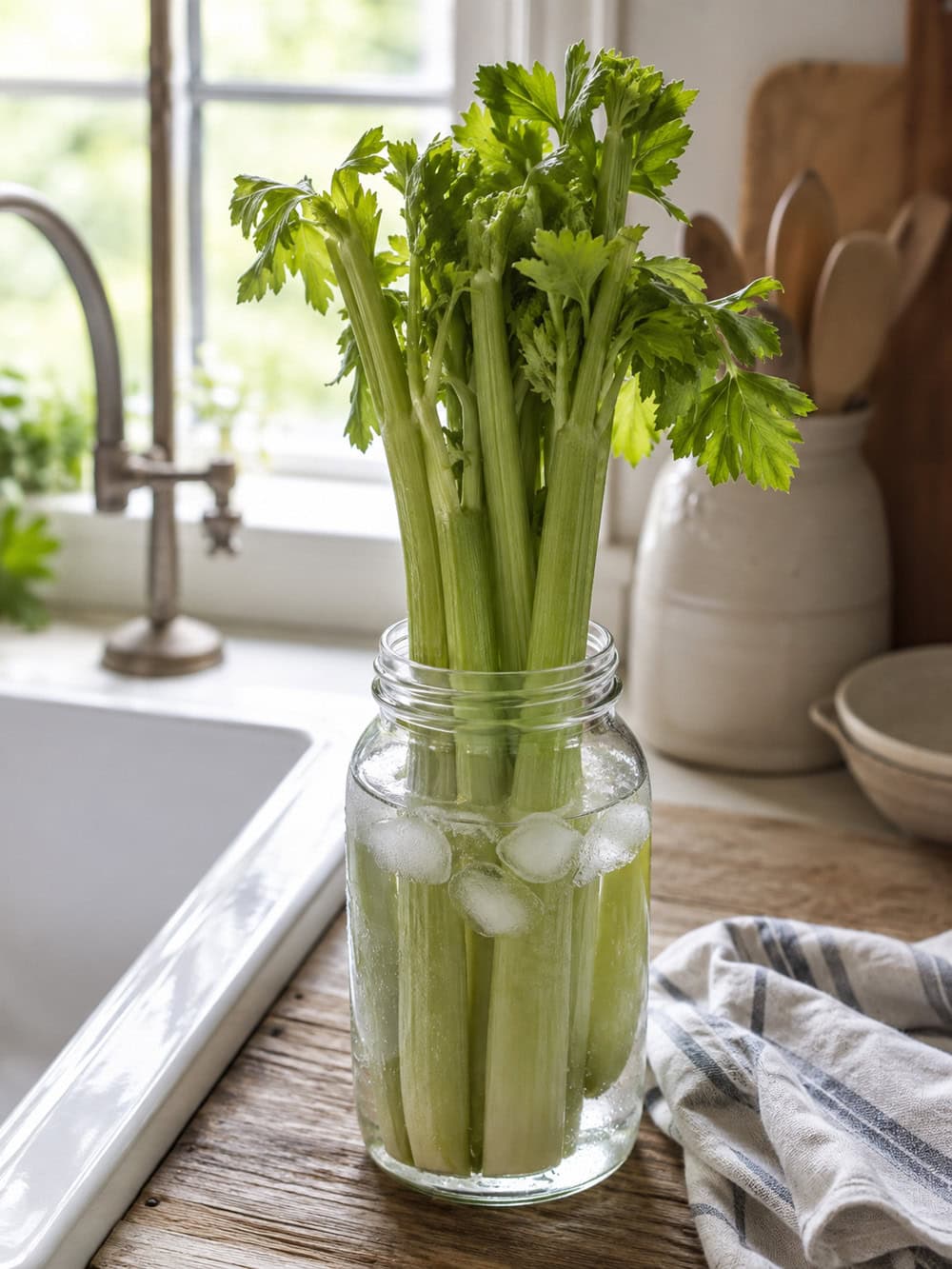
If the celery is simply a little soft and dry, trim the ends and place the stalks in a bowl or glass of very cold water.
Let them sit until they begin to firm up again.
Celery becomes limp partly because it has lost moisture, so giving the stalks a chance to rehydrate may restore some of their crunch.
This will not rescue celery that is slimy, moldy or spoiled…but it can sometimes give slightly tired celery another chance.
Waste Less
Easy Ways to Use Celery Before It Goes Bad
Even when celery is no longer crisp enough for a snack tray, it may still be wonderful in a cooked dish.
Chop it and add it to:
- Vegetable soup
- Lentil soup
- Potato soup
- Pasta sauce
- Vegetarian stuffing
- Chickpea salad
- Egg salad
- Stir fried vegetables
- Homemade vegetable stock
- A simple mixture of onions, carrots and celery
Celery can also be frozen for cooked recipes, although it will lose its crisp texture after freezing. It is best used in soups, sauces and other cooked dishes rather than salads or fresh snacks.
I like the idea of keeping a small freezer container for celery ends, celery leaves, broccoli stalks, asparagus ends, onion scraps, carrot pieces and more.
When the container is full, you already have the beginning of a flavorful homemade vegetable stock.

Kitchen Wisdom
Is the Foil Trick Worth Trying?
I think it is.
In fact, I tried it with my latest celery purchase, and I just finished the last of it in vegetable soup yesterday…after almost three weeks!
Of course, every bunch of celery and every refrigerator will be a little different. If you are going to use your celery immediately, there is really no reason to wrap it in foil.
But if it usually sits in your refrigerator for a while, this simple trick is certainly worth trying. Just remember to follow the other storage tips too!
It takes less than a minute, requires nothing fancy and may help you use more of the celery you already paid for.
Will every bunch remain perfectly crisp for weeks?
Probably not.
The freshness of the celery when you purchased it, your refrigerator temperature and the humidity inside the crisper drawer will all make a difference.
But if wrapping the celery helps it remain usable long enough to become snacks, soup, salad or vegetable stock instead of garbage…I would call that a win.
What Mom Knew
What Mom Knew
Mom may not have talked about humidity levels, plant cells or ethylene gas.
She simply knew that celery wrapped in foil seemed to last longer.
And once again…one of those tiny old fashioned kitchen habits turns out to have some very practical thinking behind it.
Sometimes the simplest tips really are the ones worth keeping.
I also love knowing how it all works because when my five year old grandson Roman asks me why I do that, I can give him a real scientific answer.
Of course, if I am feeling nostalgic, I can simply tell him that his Hema did it…so I do it too! LOL!
Have you ever stored celery in aluminum foil? Did your mother, Nonna or grandmother use this trick too? Any little food storage tricks you would like to share are always welcome here!

More Helpful Cottage Market Ideas
Six More Posts to Help Around the Kitchen and Home
These posts pair beautifully with this celery storage tip because they are full of practical ideas for saving money, using what you have and making home life a little easier.



Keep the Inspiration Going
Explore More Crafts, Cozy Roundups and Creative Ideas
There is always something new to discover here at The Cottage Market! Browse easy crafts, clever DIY projects, inspiring makeovers, cozy decorating ideas, helpful tips, delicious vegetarian recipes and all of our newest weekly roundups.
Browse DIY and Craft Ideas Explore All RoundupsVisit Your Favorite Cottage Market Corners
Do Not Miss the Freebies
More Than 4,000 Free Printables Are Waiting for You!
Print a little happiness for your home! Explore free wall art, planners, recipe cards, banners, seasonal favorites, digital papers and so much more. New printables are added regularly, so there is always something lovely waiting to be discovered.
 Browse All Free Printables
See Today’s Free Printable
Browse All Free Printables
See Today’s Free Printable
New crafts, roundups, makeovers, recipes, helpful ideas and free printables are added every week… so be sure to come back and visit again soon!


Leave a Reply